AI in industrial automation: Getting the balance right
Published on 21 May 2026 in AI
Few technologies in recent memory have generated as much debate as artificial intelligence. Some predict it will transform industrial manufacturing almost overnight. Others dismiss it as overhyped and underdelivering. Neither view is particularly useful, and both can lead companies to make poor decisions.
The manufacturers extracting real value from AI are the ones who started with a deceptively simple question: what, precisely, are we expecting this technology to do?
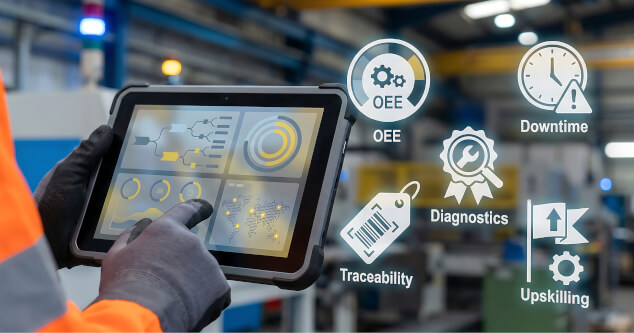
People first, technology second

Finding the right level of autonomy
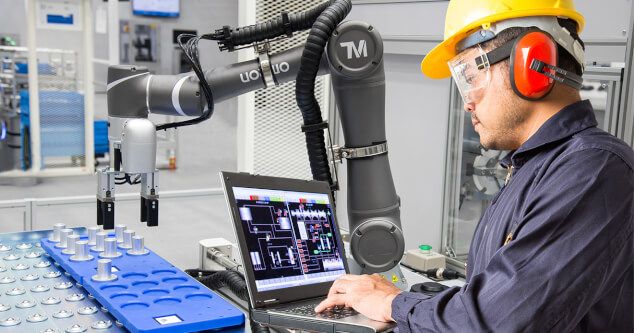
Avoiding the traps
The overestimation trap is well documented. AI deployments fail for predictable reasons: data quality is not there, organisational readiness is lacking, or the problem definition was not sharp enough to begin with. But there is another failure mode we see repeatedly in the field: treating AI as a point solution. A company solves one specific problem well, but builds it in a way that cannot be replicated elsewhere. Scaling then becomes prohibitively complex. The companies that succeed ask from day one: how do we build this so it works across more lines, more factories, more products?
The underestimation trap is equally real. Companies that dismiss AI as relevant only for large enterprises with vast data science teams risk falling behind competitors quietly extracting genuine value from targeted applications. AI tools are becoming more accessible. The barrier to entry is lower than it was even three years ago. For European manufacturers already under pressure from energy costs, labour availability, and global competition, the cost of inaction is rising.
The path between these two traps is clarity: about the problem, the data, the people involved, and what a realistic outcome looks like. With the patience to start focused, prove value, and expand from a position of confidence rather than urgency.